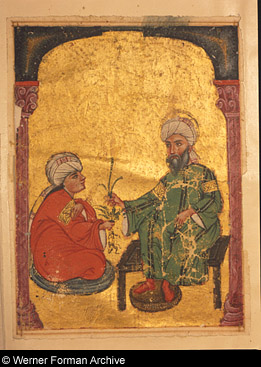
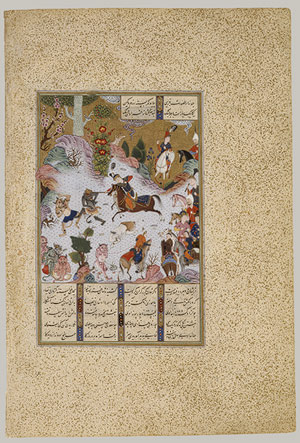
Although my ancestors are from Asia Minor, the geography that has been identified as the Heartland of Byzantium, and I spent most of my life in its capital city, Istanbul (Constantinople) where the biggest monument to this once great empire, the Hagia Sophia, is part of the backdrop of everyday life, there was something I always found a little elusive in deciphering the Byzantine civilization and culture. Considering Byzantium was actually an extension of the Greco-Roman culture which happens to form the foundations of the predominant culture in the West today, it is actually quite surprising how little is clearly known of this once central power of late antiquity and early middle ages, especially in contrast to the obsession we seem to possess for the culture of ancient Greece and Rome. Thanks to the enlightening exhibition going on at the Metropolitan Museum of Art that is due to close on July 8th, I feel I have finally found some of the clues to these curious concepts.
Showing posts with label At The Museums. Show all posts
Sunday, July 1, 2012
Byzantium and Islam : Age of Transition
Although my ancestors are from Asia Minor, the geography that has been identified as the Heartland of Byzantium, and I spent most of my life in its capital city, Istanbul (Constantinople) where the biggest monument to this once great empire, the Hagia Sophia, is part of the backdrop of everyday life, there was something I always found a little elusive in deciphering the Byzantine civilization and culture. Considering Byzantium was actually an extension of the Greco-Roman culture which happens to form the foundations of the predominant culture in the West today, it is actually quite surprising how little is clearly known of this once central power of late antiquity and early middle ages, especially in contrast to the obsession we seem to possess for the culture of ancient Greece and Rome. Thanks to the enlightening exhibition going on at the Metropolitan Museum of Art that is due to close on July 8th, I feel I have finally found some of the clues to these curious concepts.
Tuesday, June 19, 2012
A Chance Rendezvous with Sublime Images @ MOMA
Being in close proximity to New York with all its museums is one of my life's greatest gifts. I love to just walk around this wonderful city and capture images that I come across during my meanderings. I have a collection of these impromptu photos taken on the streets, in the museums and of the people of New York. I want to share my latest additions here...
Today I was in the city with my husband and while he met with a friend, I had two hours to myself... so I ran into MOMA to just wander around and see what chance encounter I might come upon. As I strolled aimlessly enjoying the midweek not-so crowded halls of MOMA, I zoomed in on an exhibition that captured my interest - New to the Print Collection: Matisse to Bourgeois. This turned out to be a selection of the latest additions to their print collection in a gallery on the second floor of the museum. I walked around, enjoying the art works and recorded the works that most appealed to me. So, here they are, my pick from MOMA's new additions to their print collection with their gallery labels...
Tuesday, May 22, 2012
Happy Birthday Mary Cassatt - A True Feminist
![]() |
| Mary Cassatt, A Woman and A Girl Driving, 1881 (Philadelphia Museum of Art) |
Mary Cassatt was a maverick among her peers that broke all the conventions of 19th century society while living a perfectly respectable life (which was the most important thing at her day and age) and enjoying success and acceptance as an American Impressionist artist in Paris. When we are still discussing gender discrimination and social gendered roles, Cassatt managed to work as a professional artist, exhibit with the Impressionists and leave behind an exceptional legacy for all American artists to follow. Some might argue at this point that she was born into a privileged background allowing her to pursue her career as an artist in Paris but I would like to point out that she was from a wealthy family in Philadelphia which was a conservative area with very strict expectations from a woman of her position. Like all women of her class, she was expected to marry and have children, not go traipsing about in Europe learning to paint and displaying her talents for all the world to see.
Wednesday, May 2, 2012
The Sacred Made Real in Zurbaràn's Crucifixion
![]() |
| Francisco de Zurbaran, The Crucifixion, 1627 (Art Institute of Chicago) |
We contemplate, analyze and even fall in love with works of art, but encountering them in sterile museum settings, away from their original locations, original intent, something vital of their true essence can get lost. Especially when trying to recreate a narrative about people and events from four centuries ago involving the most sacred of subjects "feeling the love" can be quite challenging. Zurbaràn’s Crucifixion however, is such a phenomenal painting that it can enchant a viewer despite differences in religion, culture, geography even centuries.
Sunday, April 22, 2012
Eye Miniatures from the Philadelphia Museum' Collection
I recently read a blog post about an exhibit, Look of Love, at the Birmingham Museum of Art in Alabama, that reminded me of the most fascinating objects I had encountered at the Philadelphia Museum of Art, "eye miniatures". On the second floor of the museum, in Gallery 296 there is a small display case that is lined up with a series of eye miniatures.
The tradition of giving miniatures as keepsakes, love charms or presents was on old one but in late eighteenth century a new trend of sending the beloved a miniature of one's eye was started. Mrs Fitzherbert was supposed to have sent the Prince of Wales (later George IV) a miniature of her eye on the occasion of their secret marriage in 1785. Since they could not get married without his father's consent, their whole affair had to be clandestine so the Prince had his eye painted in return and had it set in a ring for her. The enigmatic quality of these works must have been very appealing since these quickly became a rage among the upper echelons of society in France as well as England.1
I have always found miniatures to be a sweet, romantic notion but the idea of giving someone the likeness of your eye seems bizarre somehow... Curious subject matter notwithstanding, eye miniatures are precious artifacts that are alone worthy of a trip to the Philadelphia Museum.
Resources
1 Philadelphia Museum of Art
Saturday, April 14, 2012
A Special Birthday Greeting for My Mom
Today is my mother's birthday! As I was trying to figure out how to say "Happy Birthday" in a special way from so many miles away, I started to recall the visual images imprinted in my mind from all my studies and museum visits with "mother and child" themes. There are so many to choose from starting with religious themes of Madonna and Child to more recent 19th century renditions of domestic scenes by Mary Cassatt or the idealized, romanticized impressions of the interaction of mother and children by Renoir. After much deliberation I decided to use this touching scene I had encountered at my last visit to the Philadelphia Museum of Art. This little detail I took of the Spanish artist Ribera's work seems to be the perfect visualization of the affection between a mother and child, there is a sense of warmth, care and protection, all the attributes we would need from a mother figure... Anyone who has experienced the same kind of loving from their own mother would be able to relate to this painting on a personal level but... when we look at it from art historical view, we know that it is so much more than that...
"Happy Birthday Mom"
Friday, April 6, 2012
El Greco - View of Toledo
![]() |
| El Greco, View of Toledo, 1597-99 (Metropolitan Museum of Art) |

El Greco's View of Toledo from the Metropolitan Museum of Art's collection, is an engrossing landscape that captures the essence of this city while proclaiming its grandeur through the artist's unique and thoroughly modern vision. There is a very interesting article, "View of Toledo" by distinguished scholars Jonathan Brown and Richard L. Kagan which refers to this painting as one of the most evocative landscapes ever to be painted. Brown and Kagan argue that El Greco might have painted this landscape as part of a propaganda campaign to encourage Philip II to reinstate the court in Toledo after he abandoned it in 1561.
Tuesday, March 13, 2012
El Greco - A 16th century Maverick
![]() |
| El Greco, Disrobing of Christ (El Espolio), 1577-79 (Cathedral of Toledo, Sacristy) |
Monday, January 30, 2012
Konrad Witz - The Queen of Sheba with King Solomon
| Konrad Witz, The Queen of Sheba with King Solomon, 1435-37 (Gemaldegalerie, Berlin) |
This lovely square panel situated in Gallery 1 of the Gemaldegalerie, lured me in with its embossed gold background and the jewel tones of the fabrics. The color red , the design on King Solomon's green satin robe,the gold studs on his hat and the urn Queen of Sheba is holding are all wonderful details that help to balance the whole composition. I don't know if it's the figures' placement in a shallow foreground but something about this painting recalls to mind Rogier van der Weyden's paintings. Unfortunately there doesn't seem to be too much readily availabe information about Witz (in English at least) so I could not find a link.
Then again, looking at Rogier van der Weyden's Deposition from 1435, the same year as this panel, Van der Weyden's attention to the intricate details on the surfaces, and most important of all the realism conveyed in the emotions of his figures are not to be found in Witz's painting.
Having said all that, I still found The Queen of Sheba with King Solomon quite charming and worthy of a peak for anyone who is in Berlin visiting the Gemaldegalerie.
Tschuss...
Saturday, January 21, 2012
Hans Multscher - Wings of the Wurzach Altarpiece
![]() |
| Hans Multscher, Wings of the Wurzach Altarpiece, 1437 (Gemaldegalerie, Berlin) |
To the uninitiated, a visit to an art museum can be anything from a pleasant interlude to an excruciatingly painful experience but for a lover of art, visiting a great collection is analogous to being handed a piece of heavenly splendor. I have been lucky enough to find many opportunities to go exploring to my heart's content through some great collections in New York, Istanbul and London but visiting any city for a limited amount of time and having to prioritize among what to survey, always leaves me in a state of panic. During our recent two day trip to Berlin, however, instead of my usual gluttonous approach to absorbing as much as possible, I tried to be present in the moment and relished the little details I came across in the small amount of time I had.
In Art as in Life, beauty and meaning can be found in the little details which can enchant, amuse and enlighten even the most skeptical individual. It is one thing to study a work of art methodically and know all there is to know about it but , as a viewer, I believe, we must also be able to interact with it on a more personal level. Afterall, why do we prefer one work of art over another? What makes one artist more fascinating to us personally than another? What is the secret appeal of art that has some of us in a state of ecstasy while leaving others comatose from boredom? I hope to reveal my personal insights and experiences as I venture into different museums and special exhibits, in hopes of sharing my joy of art and what makes it so special and relevant for us all. I will start with the treasures I recently discovered at the Gemaldegalerie in Berlin...
The Wings of the Wurzach Altarpiece by renowned German sculptor Hans Multscher, which are considered to be one of the most important works of German painting in the first half of the 15th century, are in the first room of the Gemaldegalerie. Since the lighting in the galleries were not ideal, it was impossible to take good quality photographs; Google Art Project has wonderful visuals of these panels that are definitely worthy of close inspection.
The wings of the altar piece depicting scenes from Christ's Passion and the Life of Mary, are striking for their Flemish influenced realism and brilliant colors. The intricate detailing reminiscent of manuscript illuminations is amazing given the size of the altarpiece. The artist has started to give the protagonists unique characteristics and use perspective as well as finding charming solutions to problems he was not advanced enough to solve, like Christ's left leg that is supposed to be coming out of the tomb in The Resurrection of Jesus Christ which is concealed beneath the drapery.
The first scene on the upper left of Christ's Passion start with 'Christ on the Mount of Olives'. The disciples on the left are asleep in varying poses while Christ is praying amidst a field full of flowers. In the background Judas is leading a group of Roman soldiers towards Christ.
The next scene on the upper right is 'Christ before Pilate' where Christ is being led towards Pilate by a big crowd. Pilate is shown washing his hands to signify he is not responsible for the execution. The figures crowded into the front of the picture plane all bear different facial expressions.
On the lower left is 'Christ Bearing the Cross' in which Christ bent under the weight of the cross dominates the lower right of the panel. Virgin Mary, Saint John and the women stand in the back totally powerless while little children throw rocks at him. There are bones and a skull on the ground foreshadowing Jesus's death.
On the lower right is the scene of the 'Resurrection.' Jesus ascends from a sealed sarcophagus. The rocky cave it is supposed to be set in, is alluded to by the rock formations around the tomb. The guards are sleeping on the ground around the tomb. Christ 's right hand is raised in blessing and he holds a banner of the cross in his left hand as a sing of victory. Christ's left leg is conveniently hidden under the drapery.
The first scene from Mary's life in the upper left is 'Birth of Christ' where Mary and Joseph are kneeling and worshipping the child beneath the roof of the stable.The angel announcing the Lord's birth to the shepherds can be seen in the back while a crowd of men and women are watching from behind a fence with varying expressions.

On the upper right is the 'Adoration of the Kings'. Kings from different age groups and races are all gathered here to present the baby Jesus with gold and gifts. Joseph seen behind Mary holding a frying pan with their meal brings a dose of pedestrian charm into the picture.
On the lower left is 'The Pentecostal Feast' where Mary sits in the center of a circle with the twelve Apostles in a chapel-like room. The Holy Spirit is depicted hovering over them as a dove, and the its rays are depicted as tiny flames above the heads of the figures.

The last scene on the lower right is 'The Death of Mary' in which Mary is lying at the center, surrounded by the apostles and Christ holding a miniature of his mother as a symbol of her soul. The remarkable realism of the little details and the characteristic of individual figures is especially apparent in this panel.
In Art as in Life, beauty and meaning can be found in the little details which can enchant, amuse and enlighten even the most skeptical individual. It is one thing to study a work of art methodically and know all there is to know about it but , as a viewer, I believe, we must also be able to interact with it on a more personal level. Afterall, why do we prefer one work of art over another? What makes one artist more fascinating to us personally than another? What is the secret appeal of art that has some of us in a state of ecstasy while leaving others comatose from boredom? I hope to reveal my personal insights and experiences as I venture into different museums and special exhibits, in hopes of sharing my joy of art and what makes it so special and relevant for us all. I will start with the treasures I recently discovered at the Gemaldegalerie in Berlin...
The Wings of the Wurzach Altarpiece by renowned German sculptor Hans Multscher, which are considered to be one of the most important works of German painting in the first half of the 15th century, are in the first room of the Gemaldegalerie. Since the lighting in the galleries were not ideal, it was impossible to take good quality photographs; Google Art Project has wonderful visuals of these panels that are definitely worthy of close inspection.
The wings of the altar piece depicting scenes from Christ's Passion and the Life of Mary, are striking for their Flemish influenced realism and brilliant colors. The intricate detailing reminiscent of manuscript illuminations is amazing given the size of the altarpiece. The artist has started to give the protagonists unique characteristics and use perspective as well as finding charming solutions to problems he was not advanced enough to solve, like Christ's left leg that is supposed to be coming out of the tomb in The Resurrection of Jesus Christ which is concealed beneath the drapery.
The first scene on the upper left of Christ's Passion start with 'Christ on the Mount of Olives'. The disciples on the left are asleep in varying poses while Christ is praying amidst a field full of flowers. In the background Judas is leading a group of Roman soldiers towards Christ.
The next scene on the upper right is 'Christ before Pilate' where Christ is being led towards Pilate by a big crowd. Pilate is shown washing his hands to signify he is not responsible for the execution. The figures crowded into the front of the picture plane all bear different facial expressions.
On the lower left is 'Christ Bearing the Cross' in which Christ bent under the weight of the cross dominates the lower right of the panel. Virgin Mary, Saint John and the women stand in the back totally powerless while little children throw rocks at him. There are bones and a skull on the ground foreshadowing Jesus's death.
On the lower right is the scene of the 'Resurrection.' Jesus ascends from a sealed sarcophagus. The rocky cave it is supposed to be set in, is alluded to by the rock formations around the tomb. The guards are sleeping on the ground around the tomb. Christ 's right hand is raised in blessing and he holds a banner of the cross in his left hand as a sing of victory. Christ's left leg is conveniently hidden under the drapery.
| Detail of the flowers in Resurrection |
The first scene from Mary's life in the upper left is 'Birth of Christ' where Mary and Joseph are kneeling and worshipping the child beneath the roof of the stable.The angel announcing the Lord's birth to the shepherds can be seen in the back while a crowd of men and women are watching from behind a fence with varying expressions.
On the upper right is the 'Adoration of the Kings'. Kings from different age groups and races are all gathered here to present the baby Jesus with gold and gifts. Joseph seen behind Mary holding a frying pan with their meal brings a dose of pedestrian charm into the picture.
On the lower left is 'The Pentecostal Feast' where Mary sits in the center of a circle with the twelve Apostles in a chapel-like room. The Holy Spirit is depicted hovering over them as a dove, and the its rays are depicted as tiny flames above the heads of the figures.
The last scene on the lower right is 'The Death of Mary' in which Mary is lying at the center, surrounded by the apostles and Christ holding a miniature of his mother as a symbol of her soul. The remarkable realism of the little details and the characteristic of individual figures is especially apparent in this panel. | Detail from The Death of Mary |
Hans Multscher is primarily known as a sculptor and there is some speculation that this one of the reasons this work contains two signatures by him, to ensure its correct authorship. The altar piece was owned by Count of Waldburg Zeil in Schloss in Wurzag, which is where it gets it's name; the original location is unknown and the central altar that was probably carved, is lost as well. But what is left of this wonderful work is still incredible to encounter.
Sources
http://www.googleartproject.com/museums/gemaldegalerie/the-wings-of-the-wurzach-altar-2
http://www.wga.hu/html_m/m/multsche/wurzach/index.html
Friday, January 13, 2012
A Treasure Trove of a Museum - GEMALDEGALERIE
We spent two glorious days in Berlin as we make our way back to the States. I came with the intention of realizing my lifelong dream of seeing the Pergamon Museum which I accomplished yesterday but the Gemaldegalerie, today, was more than anything I could have possibly imagined.
I had an experience akin to walking into a virtual art history book. Gemaldegalerie is one of the best museums I have seen anywhere in the world. It seems to have a perfect representation of 13th century to 18th century European Art divided into two main sections Art from Italy, France and Spain and Art from the North of the Alps, as well as a gallery of paintings from England, works by Sir Joshua Reynolds and Thomas Gainsborough.
Five hours and five hundred photographs later, I had to leave ... but my thoughts are still there and I hope I can get back here sometime soon. All the art history classes and books and blogs I have been reading proved their weight in gold today... Every single painting, in all the galleries, was observed with a knowing eye. I basically took photographs of the works I particularly favored or details that I found charming in specific paintings... I can't wait to share them all here in this blog... soon.
Tuesday, December 27, 2011
Following Ingres' Line of Beauty at the Met
![]() |
| Jean Auguste Dominique Ingres, La Grande Odalisque, 1814 (Musee du Louvre) |
![]() |
| Ingres, The Bather of Valpincon,1808 (Musee du Louvre) |
Of course, most of Ingres' oeuvre is now housed at the Louvre Museum in Paris but I was able to encounter some of his works at the Metropolitan Museum of Art in New York. Some of Ingres most famous works are his Oriental nudes which are incredibly fascinating due to his unique style of combining Classicism with Mannerism. There is an almost photographic quality in some parts of his works with the amount of detail he portrays with such precision while simultaneously distorting the figures to suit his purpose. This is especially apparent in his sensual nudes who seem to posses extremely elongated bodies and no muscles, just soft, smooth flesh. The critics who saw these nudes at the Salon noted that he added two or three extra vertebra to these figures and it was actually impossible for them to stand or walk. The sense of weightlessness that can be observed in the Bather of Valpincon and the impossible position of the Grande Odalisque are all part of the fantasy Ingres creates about an exotic world of his imagination. Although he produced many Oriental themed paintings, Ingres never actually traveled to the Middle East or encounter a real Harem or an Odalisque in his life. His nudes appealed to the Western male viewer because these women were there for male consumption and even their feet which didn't look like they had touched the ground conveyed the message of being kept for the pleasure of men. Ingres used the S-shaped Line of Beauty to enhance his compositions to great effect.
Being a Classicist in the Davidian tradition, Ingres believed contours were the most important element in a painting, that even clouds should have contours. He used closed forms where following the contour of the figure, the viewer can go all the way around the figure to arrive at the point where they started; this is very obvious in his nudes. I was able to follow his contours first hand as I stood before the Odalisque in Grisaille, at the Met, "an unfinished repetition of the celebrated Grande Odalisque of 1814" according the museum label. In black and white, the soft contours of the body are enhanced more clearly and Ingres' reputation as a master of realism is reinforced. Also lacking the intricate details and lavish colors, Ingres' Classicism is better identified with the stark reality of his lines and shadows and the perfectly smooth surface of his canvas. The sense of quiet that permeates The Bather of Valpincon, can also be felt in this painting; the lack of noise is one of the qualities that captured my attention first. This is a great work in learning the flow of the brush of such a master and deciphering how he worked.
Ingres painted Le Grande Odalisque while he was in Rome and studying the masters, especially Raphael whom he was fascinated with; as a matter of fact, the profile of the figure was likened to something Raphael would paint. I think finding a Raphael that most closely resembles this figure would be delightful, but that is going to have to be a project for another day. For now, I leave you with Ingres and his voluptuous nudes...
![]() |
| Jean Auguste Dominique Ingres and Workshop, Odalisque in Grisaille, 1824-34 (Metropolitan Museum of Art) |
Sunday, December 4, 2011
A Friendship Portrait by Friedrich Overbeck
![]() |
| Friedrich Overbeck, Portrait of Franz Pforr, 1810 (Nationalgalerie, Berlin) |
The Nazarenes were a highly individualized group of students from the Vienna Academy of Art, in 1809, who were opposed to the Classical teachings of the academy and believed inspiration could be found in medieval and Christian art as well as in their Germanic ancestry. They revered the masters of the Quattrocento, especially Raphael and the 16th century German artist Durer. They sought to apply to their work the views of art and its social role expressed in influential books of the previous generation such as Wilhelm Wackenroder's Herzensergiessungen eines kunstliebenden Klosterbruders (Outpourings of an Art-Loving Monk). Led by Friedrich Overbeck and Franz Pforr, they swore an oath of brotherhood and formed the Lukasbund (the brotherhood of St Luke) after the patron saint of medieval and Renaissance artisans. The principle of their program was that art must serve only the highest ends (religion) and never the vanity of courts or wealthy individuals.1
Instead of copying the works of the masters, as instructed at the academy, they believed in working as autonomous artists in order to develop their own individual talents. Overbeck stated that "even if he did not learn to use paint like a Titian, or become as expert in chiaroscuro as a Correggio, the important thing was that he become an Overbeck." They took nature as their true model and each artist followed his own inclinations in pursuit of their common ideals.2
The members of the Lukasbund came to regard illusionistic painting as the mark of the artist's subservience to the whims of their patron who wanted them to represent the world as they wanted to be seen. According to Lionel Gossman, their goal was to reveal the essential truth of things as perceived by the artist's imagination. Aiming to produce art that is more than pleasing or ornamental they started to use elements to refute the illusion of depth. In drawing, contour and line were emphasized with a minimum of modeling and their subjects were placed parallel to the surface of the work. Pforr and Overbeck had developed a theory of color symbolism that they used as an important component of their compositions but color (local color) was always considered to be secondary to line. They wanted to represent the essential forms of things rather than what they perceived to be their passing appearances.3
In 1810, after the French invasion of Vienna, Overbeck and several other members of the Lukasbund moved to Rome with hopes of finding a very pure community where artists would be welcome. They set up their community in an abandoned monastery where they proceeded to live like monks, sleeping in little cells, painting, eating sparsely, growing their hair and wearing loose robes - all of which earned them the derogatory nickname "Nazarenes".
The Portrait of Franz Pforr painted by Friedrich Overbeck intended as a friendship portrait (freundschaftsbild) full of symbolic iconography could be used as a visual aid in understanding the unique concepts and ideals of the two artists. Overbeck wrote to one of his Lukasbruder describing the portrait:
"He is standing in ancient German garb at an open Gothic window, framed with stone-carved ornaments and surrounded by grapevines. One looks into a window, where on the opposite side in the background is sitting a young woman busy with knitting and reading in a devotional book. In front of her on the table are lilies in a vessel and in the window sits a falcon on his perch; in the back one looks down on a Gothic town and beyond that out on the sea. The whole is meant to represent him in the situation he would be happiest in..."
According to Helmut Nickel in his review of the work for the Metropolitan Museum Journal, the church spires resemble St. Stephen's in Vienna and the distant seashore and towering cliffs most likely those of the Sorrento peninsula, near Naples.4 The juxtaposition of a medieval German townscape and an Italian coastline points again to the union of Raphael and Durer, "Italia" and "Germania," and, at the same time, to friendship between the Italianate Overbeck and the Germanic Pforr.5 Nickel also mentions the red-wine color of the medieval type of tunic Pforr is wearing, a hue used to indicate the "saintliness" of the wearer according to the color symbolism developed by the two artists.6 Besides the Gothic Cathedral and the color red,there are other references to Christianity as well, including the lily and the lectern by the woman both attributes of the Virgin Mary, the grapevine symbolizing the Eucharist and the cross and skull, Pforr's emblem of the victory of faith over death. The domesticated falcon sitting on his perch could be symbolizing hope or the traditional Christian symbol of gentile converted to Christianity.
The woman in the background is identified as part of the ideal Pforr was referring to in a letter to his Lukasbund friends explaining his wish to spend his life as a Schlachtenmaler (painter of battle scenes) in a room hung with paintings of bygone ages and with a lovely wife sitting at a table nearby occupied with some domestic work.5 The woman's coloring is also signifying gentleness.
![]() |
| Hans Sues von Kulmbach, Girl Making a Garland, reverse of Head of young Man, 1510 (Metropolitan Museum of Art) |
The Romantic notion that art is not supposed to represent reality by imitation but signify the sole of the subject by transformation is achieved masterfully in Portrait of Franz Pforr. Overbeck and Pforr wanted to purify art from all the illusionistic influences of Renaissance and in its stead wanted to produce what they considered to be a clear and pure art that came from earlier influences in 14th and 15th centuries, literary works of German Romantic writers and above all from their imagination. There is a sense of mystery and playfulness in deciphering their works which also happen to be intellectually engaging. Their unusual pictorial elements combined with synthesized ideas from varying sources makes me wonder what the experience of the viewer unfamiliar with the iconography would be though.
1 Lionel Gossman, "BEYOND MODERN: The Art of the Nazarens," Common Knowledge 14.1, (2008) p. 60-61
2 Ibid., p. 64
3 Ibid., p. 68
4 Helmut Nickel, "The Bride and the Cat: A Possible Source for Overbeck's Freundschaftsbild of Franz Pforr" Metropolitan Museum Journal, Vol. 27, (1992), pp. 183-187
5 Lionel Gossman, "BEYOND MODERN: The Art of the Nazarens," Common Knowledge 14.1, (2008) p. 90
6 Ibid.,p. 185
7. Helmut Nickel, "The Bride and the Cat: A Possible Source for Overbeck's Freundschaftsbild of Franz Pforr"Metropolitan Museum Journal, Vol. 27, (1992), pp. 185
5 Lionel Gossman, "BEYOND MODERN: The Art of the Nazarens," Common Knowledge 14.1, (2008) p. 90
6 Ibid.,p. 185
7. Helmut Nickel, "The Bride and the Cat: A Possible Source for Overbeck's Freundschaftsbild of Franz Pforr"Metropolitan Museum Journal, Vol. 27, (1992), pp. 185
Sunday, November 13, 2011
Patronage and Secular Subject Matter in Islamic Art
Islamic Art's unique artistic language can sometimes be difficult to read in terms of western iconography due to its foundations in the Islamic way of life that is guided directly by the laws of the religion. Rarely have I witnessed information that has made the connection between Western and Islamic patrons and the art produced for them so clear as the lecture I listened to by Jerrilyn Dodds last week. My desire to communicate all the wonderful wisdom I garnered after listening to her lecture lead me down a path that was familiar yet remote at the same time, finally culminating in the Garden of Eden that I never fail to find in art.
Jerrilynn Dodds, Dean of Sarah Lawrence College has been giving a three part lecture series, Islamic Art and Society, in conjunction with the opening of the New Galleries for the art of the Arab Lands, Turkey, Iran, Central Asia and Later South Asia at the Metropolitan Museum of Art. I was lucky enough to attend the second in the series, Luxury Arts and the Art of the Book which focused on the secular elements used in the representation of Islamic kingship. Dodds presented an interesting perspective on the patrons and the content of these works of art.
The 10th century plate with Arabic Inscription from Iran, that greets you as soon as you enter the New Galleries was the object Dodds started her discussion with. The prosaic inscription "Planning before work protects you from regret; prosperity and peace" she mused has a Hallmark-like quality. Dodds' interpretation of the abstract design as the desire of people wanting to be engaged intellectually was and idea that held great appeal.
The second object Dodds talked about was a oliphant Hunting Horn similar to the one on the left. The value of the material attesting to the magnitude of the ruler and images of animate beings to his liberal understanding of Islam. The hunting horn was decorated with hunting animals and the mythological figure, Harpy. Dodds defined an Islamic ruler owning such an object as his right to own land, to hunt and as a reminder of these privileges to his people. She also connected the images of animals to the myth of palace art and mentioned Arabian Nights written at the time of the Abbasids, as deliberating the rights of Kings.
Next, we touched upon the Golden Age of Islam (9th-12th century) a time for great intellectual and cultural creativity, when intellectuals had found and translated into Arabic the classical manuscripts from antiquity. Dodds mentioned the great curiosity for science and philosophy at this time. The richest city in the world, Baghdad, founded by the Abbasids, was syncretic compounding Hellenistic, Christian, Persian, Jewish, Zoroastrian and Hindu ideas. The following manuscripts were the visual manifestations of the connection and influence of these different cultures on Islamic culture.
![]() |
| Arabic Translation of the Materia Medica of Dioscorides, 1229 Topkapi Palace, istanbul |
![]() |
| Page from Dispersed Manuscript of an Arabic Translation of the Materia Medica of Dioscorides, Abdallah ibn al-Fadl, 1224, Iraq Gallery 454 |
![]() |
| Byzantine miniature of Saint Mark, mid to late 12th century |
![]() |
| Astrolabe of 'Umar ibn Yusuf ' 1291, Yemen Gallery 454 |
![]() |
| From the Book of Knowledge of Ingenious Mechanical Devices by al-Jazari 1315, Syria Gallery 454 |
![]() |
| al-Wasiti, Yahya ben Mahmud Al-Hariri's Maqamat Baghdad, 1237 (Bibliotheque Nationale, Paris) |
![]() |
| Caravan of Pilgrims traveling to Mecca, al-Wasiti, Yahya ben Mahmud Al-Hariri's Maqamat Baghdad, 1237 (Bibliotheque Nationale, Paris) |
|
| A Literary Reunion, al-Hariri's Maqamat, (Institute of Oriental Studies, St. Petersburg, Russia) |
![]() |
| Woman with a herd of Camels, al-Wasiti, Yahya ben Mahmud Al-Hariri's Maqamat Baghdad, 1237 (Bibliotheque Nationale, Paris) |
![]() |
| Rashid al-Din Fazl-Allah, Jami al-Tavarikh Iran, 1400 (Metropolitan Museum of Art) |
![]() |
| Eskandar (Alexander the Great) enters the Land of Darkness, Rashid al-Din Fazl-Allah, Jami al-Tavarikh, Iran, 1314 (Edinburgh University Library) |
If Rashid al-Din's Jami as-Tawarikh was the history of the Mongols, the Shahnameh or the 'Book of Kings', the most important creation of New Persian Literature, was the national epic of the Iranian people. Written by Ferdowsi, twice as long as Homer's Iliad and Odysseus taken together, it blended Iran's ancient myths and legends with accounts of major events in its past, celebrating the survival of a civilization that went back 7000 years.5 The first known illustrated copies of the Shahnameh date from the time shortly after the Mongols conversion to Islam under Ghazan Khan (1295 -1304). Ghazan and the succeeding Islamic emperors considered art patronage as a reflection of the majesty of their kingship. The emergence of Persian manuscript painting which was also the regeneration of Iran's political power under the Mongols coincides with this era. The Shahname was a source of pride for Iran who was recovering its territorial, political and cultural history.6 There are many copies present because commissioning opulent copies of the Shahname became almost a royal duty. The stories lent themselves to heroic actions, dramatic deeds and divine glory.
![]() |
| Iskandar (Alexander the Great) at the talking tree. Shahnameh, Il-Khanid period, 1330- 1336 Iran, Tabriz (Freer Gallery of Art) |
![]() |
| Zal is sighted by a caravan Shahnameh, Attributed to Abdul Aziz Iran, Tabriz, Safavid Period, 1525 (Art and History Collection LTS) |
![]() |
| Isfandiyar's Funeral Procession from the Great Mongol Shahnama Iran, Tabriz, 1330's (Metropolitan Museum of Art) |
![]() |
| The Feast of Sada, Shahnama of Shah Tahmasp Attributed to Sultan Muhammad, Iran, Tabriz 1525 (Metropolitan Museum of Art) |
![]() |
| The Court of Gayumars,Shahnama of Shah Tahmasp Iran, Safavid, 1522-1525 (Aga Khan Museum, Toronto, Canada) |
|
| Tahmuras Defeats the Divs, Shahnama of Shah Tahmasp Iran, Tabriz, 1522-1524 (Metropolitan Museum of Art) |
![]() |
The Emperor's Carpet detail
Iran, second half 16th century
Gallery 462
|
![]() |
| The Safavid Prince Haidar Mirza's Entrance to Istanbul in 1590 from the Divan of Mahmud Abd al-Baki Ottoman Iraq, Baghdad, 1590-95 (Metropolitan Museum of Art) |
![]() |
| The Shaikh al-Islam Discoursing to an Audience from the Divan of Mahmud Abd al-Baki Ottoman Iraq, Baghdad, 1590-95 (Metropolitan Museum of Art) |
When viewing the above miniatures with these concepts in mind, it is amusing to see that the Shaikh al-Islam (the most senior religious official similar to an archbishop) is the most important personage in the miniature on the left since his turban is huge. The hierarchy becomes even more pronounced in a military scene with all the different ranks lined up next to one another. There are some very intriguing details that caught my attention in the above miniatures. First was the way the artist handled the tree in the Shaikh al-Islam miniature; it starts out as almost a painting or a window on the wall behind him and then comes out of the picture plane to become a part of the border decoration forming a connection between the border and the inner picture. This is a very interesting concept since in miniature painting as in illumination there are very strict rules that dictate how a page is supposed to be set up and artists are limited from realistic representation. I like to think that in doing so, the artist used artistic license to break thorough the limiting barriers set forth.
The back view of Prince Haidar entering the city in the miniature on the right is another that merits furter investigation. The foreshortening, the almost natural gait of the horse are little details that seem to be little secrets hiding in open sight.
![]() |
| Tughra of Sultan Suleiman the Magnificient, Ottoman Turkey, Istanbul, 1555 |
It is said that "The Qur'an was revealed in Mecca, Read in Cairo and Written in Istanbul." - this particular quote I think, explains the prominence of Ottoman calligraphy and illumination in Islamic art. Of course, it is impossible to ignore the influence of Tabriz since the artists from the area immigrated to Istanbul after the conquest of Selim I, of the city in 1514. Another story from history that sheds light on the high regard with which the Ottomans held the art of the book, is that Selim I (Suleiman's father) who was known for his fierceness was said to have held his calligraphy master's ink pot while he worked.
![]() |
| Gentile Bellini, Portrait of Mehmed II, 1480 dated 25 November 1480 (The National Gallery, London) |
![]() |
| Sultan Mehmet II Smelling a Rose Ahmed Siblizade, 1480 (Topkapi Palace Museum Library, Istanbul) |
Gentile Bellini painted this portrait of Sultan Mehmet II during a 'state-sponsored" visit to Istanbul. Sultan Mehmet is portrayed under a marble arch, a universal symbol of triumph appropriate for the Sultan who conquered Constantinople in 1453. The fictive framework within the painting, although not of any consequence for the Ottoman court artists, demonstrates Gentile's ability to creates a three dimensional space, one of the primary virtues of Italian Renaissance painting. 8 It is very interesting to compare this portraits side by side with the miniature from the same period by the Ottoman court painter Ahmed Siblizade and pick out the influences as well as the differences in their respective approaches to the same sitter. While the Belini represents the consummate ruler with allusions to the lands he ruled in the form of the golden crowns lined up around him, the jewel encrusted cloth hanging over the parapet, and a bored expression on his face, the Ottoman miniature has the conqueror of the capital of the Byzantine empire smelling a rose.
![]() |
| Alexander visits the Sage Plato, from Khamsa (Qunitet) of Amir Khusrau Dihlavi, attributed to Basawan, Pakistan, Lahore, 1597-98 (Metropolitan Museum of Art) |
![]() |
| Portrait of Shah Jahan on Horseback India, 17th Century (Metropolitan Museum of Art) |
![]() |
| Portrait of Shah Jahan on Horseback :Leaf from the Shah Jahan album, attributed to Payag, 1628 (Metropolitan Museum of Art) |
The unique style of painting initiated during the reign of Akbar developed into a more naturalistic style worked out using European artistic techniques like perspective and chiaroscuro by the 17th century. Looking at the two portraits of Shah Jahan that Jerrilynn Dodds referred to as passage portraits, it is interesting to note the horse and the flora rendered naturalistically while the surface is still left flat. Unlike earlier Islamic miniatures which were the illustrations for an accompanying text, these studies seem to be individualized portraits. One of the most prominent feature of these portraits is the use of distinct Western iconography; I just love the halos around Shah Jahan's head and the putti that seem so familiar in such an unexpected context.
Over centuries of existing with and absorbing other cultures, Islamic patrons as well as artists seem to have found a visual vocabulary of their own that exists within the restriction placed on the representation of living beings. The boundaries set before them seems to have set them on a path toward abstraction and an incredibly imaginative pictorial language. Dodds has a very elegant explanation for these boundaries as the way to eviscerate being seduced by images in order to reach the divine. Finally, Jerrilynn Dodd's closing remark is one I take to heart and feel explains not just the reasoning of abstraction in Islamic representation but also my personal philosophy - "Most profound personal truths can be found only intellectually."
1 Al Hassani, Salim T. S., Elizabeth Woodcock, and Rabah Saoud. "The Elephant Clock." 1001 Inventions: Muslim Heritage in Our World. 2nc ed. Manchester, Great Britain: Foundation for Science Technology and Civilisation, 2007. 16. Print
2 Ibid., 316
3 Grabar, Oleg. Islamic Visual Culture, 1100-1800. Aldershot, England: Ashgate/Variorum. 2006. Print
4 "The Fitzwilliam Museum : An Explosion of Images." The Fitzwilliam Museum : Home. Web. 11 Nov. 2011 <http://www.fitzmuseum.cam.ac.uk/gallery/shahnameh/vgallery/section2.html?p=26>
5 Ibid., <http://www.fitzmuseum.cam.ac.uk/gallery/shahnameh/index.html>
6 Ibid., <http://www.fitzmuseum.cam.ac.uk/gallery/shahnameh/patronage.html>
7 Welch, Stuart C. "78 Pictures from a World of Kings, Heroes, and Demons: The Houghton Shah-nameh." The Metropolitan Museum of Art Bulletin 29.8 (1971): 341-57. Print
8 Carboni, Stefano. Venice and the Islamic World: 828 - 1797 : Intitut Du Monde Arabe, Paris, Ocotober 2, 2006 - February 18, 2007: The Metropolitan Museum of Art, New York, March 27 - July 8, 2007. New York: Metropolitan Museum of Art [u.a., 2007. 303. Print
9 Department of Islamic Art. "The Art of the Mughals before 1600". In Heilbrunn Timeline of Art History. New York: The Metropolitan Museum of Art, 2000 - http://www.metmuseum.org/toah/hd/mugh/hd_mugh.htm (October 2002)